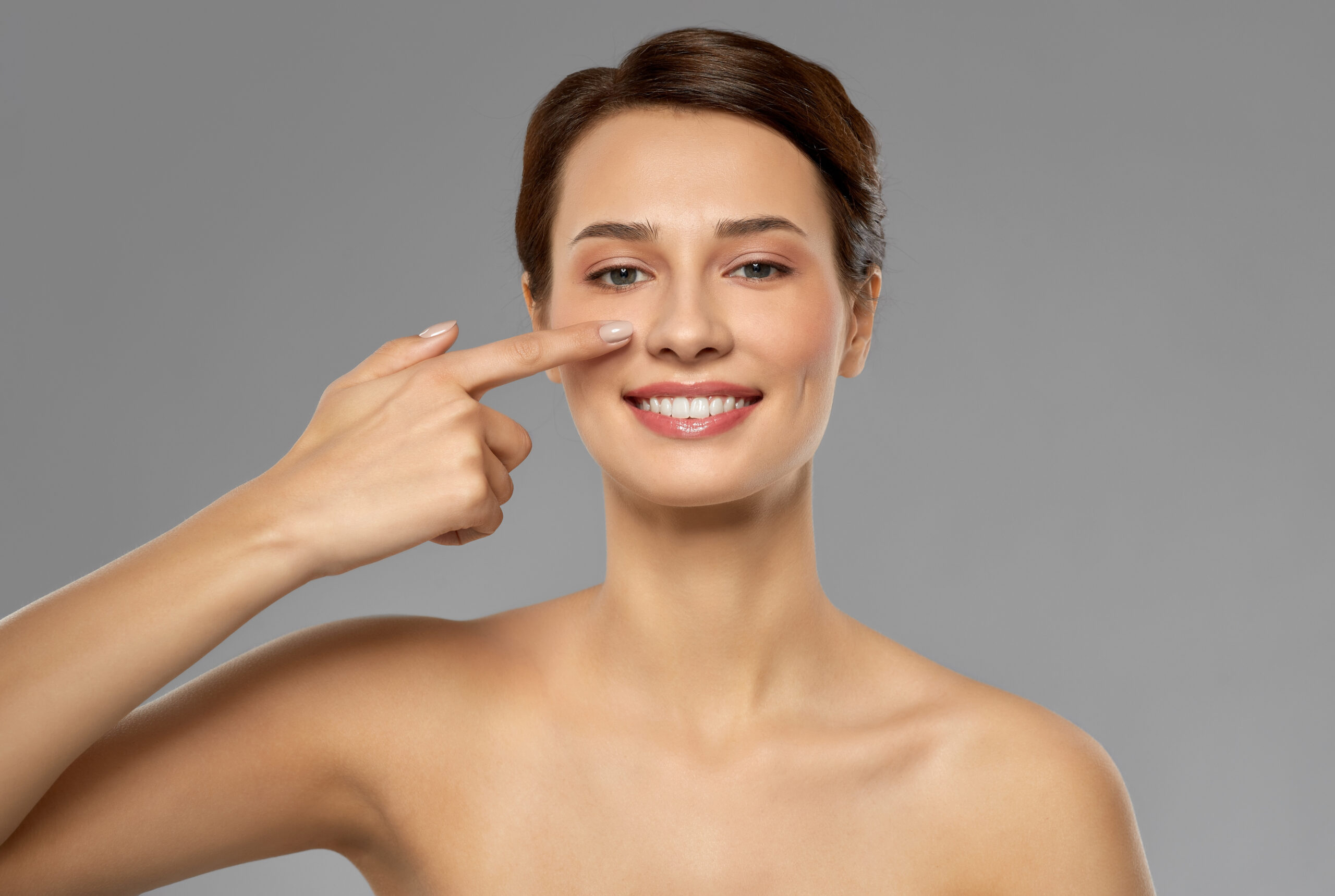
Advanced open & closed rhinoplasty techniques to reshape, resize, or reconstruct your nose — improving facial balance, breathing, and confidence with natural-looking, lasting results.
Rhinoplasty — commonly known as a "nose job" — is one of the most popular cosmetic procedures worldwide. It surgically modifies the shape, size, or proportions of the nose to improve facial harmony. It can also correct functional issues like breathing difficulties caused by structural defects.
The goal is not just a beautiful nose, but one that complements your entire face harmoniously — enhancing your natural features without looking "done."
People choose rhinoplasty for a range of aesthetic and functional concerns. Our surgeons address both with equal expertise.
Improve facial symmetry and enhance your overall appearance.
Correct structural issues affecting breathing and daily quality of life.
Different rhinoplasty approaches are used based on the patient's goals, anatomy, and complexity of the case.
A small incision on the columella (the strip between nostrils) provides better visibility and precision for complex reshaping. Ideal for significant structural changes.
All incisions are made inside the nose, leaving absolutely no visible external scars. Best suited for minor corrections with shorter recovery time.
Performed to correct or improve results from a previous nose surgery. Requires advanced expertise due to scar tissue and altered anatomy.
Focused entirely on improving breathing and correcting structural abnormalities like a deviated septum, turbinate hypertrophy, or nasal valve collapse.
Uses dermal fillers to temporarily reshape and contour the nose without any surgery or downtime. Results are not permanent but offer immediate improvement.
You may be a suitable candidate for rhinoplasty if you meet the following criteria:
A detailed consultation is the first step toward a successful rhinoplasty. Our surgeons take the time to understand your goals, analyze your facial anatomy, and create a personalized plan.
Our surgeons follow a precise, time-tested protocol to ensure safe, consistent, and natural-looking results every time.
Rhinoplasty results are long-lasting and significantly improve facial aesthetics, breathing, and self-confidence.
Recovery from rhinoplasty is gradual. Patience is essential — the best results reveal themselves over several months as swelling fully subsides.
Many patients confuse these two procedures. Here is a clear breakdown of the key differences.
| Feature | 👃 Rhinoplasty | 🔬 Septoplasty |
|---|---|---|
| Primary Purpose | Cosmetic & functional improvement | Functional only — breathing |
| Focus Area | External nose shape and appearance | Internal nasal septum structure |
| Visible Changes | Yes — shape, size, proportion | No external changes visible |
| Insurance Coverage | Usually not covered (cosmetic) | Often covered (medical need) |
| Recovery Time | 1–2 weeks visible recovery | 1 week typical recovery |
| Can Be Combined? | Yes — Septorhinoplasty combines both in one procedure | |
You may experience mild discomfort after surgery, but it is very manageable with prescribed medication. Most patients describe post-op discomfort as pressure or congestion rather than sharp pain. By day 3–4, discomfort significantly reduces.
In closed rhinoplasty, all incisions are inside the nose — completely invisible. In open rhinoplasty, a tiny scar on the columella fades significantly over 6–12 months and is barely noticeable in normal social settings.
Surgical rhinoplasty results are permanent. The nose does not "revert" to its original shape. However, natural aging may cause very gradual subtle changes in skin texture and facial tissue over many decades — the overall shape and corrections remain intact.
You should avoid resting glasses directly on the nose bridge for at least 3–4 weeks after surgery to avoid pressure on healing tissues. During this period, you can tape glasses to your forehead or use contact lenses. Your surgeon will advise based on your specific recovery.
Yes! Functional rhinoplasty is specifically designed to improve nasal airflow. A deviated septum, collapsed nasal valve, or enlarged turbinates can all be corrected. Many patients choose to combine cosmetic and functional rhinoplasty in a single procedure called septorhinoplasty.
We recommend waiting until facial growth is complete — typically 17–18 years for girls and 18–19 for boys. Operating before growth is complete may result in changes to the surgical outcome as the face matures.
Like any surgical procedure, risks include infection, bleeding, scarring, breathing issues, or asymmetry. The need for revision surgery is rare. Our team follows strict safety protocols and our experienced surgeons minimize these risks significantly. We will discuss all risks in detail during your consultation.
Our expert rhinoplasty surgeons are here to guide you through every step — from consultation to recovery. Transparent pricing. Personalized care. Natural results.
Take the first step towards better health. Our specialists are ready to help with a confidential, judgement-free consultation.